Rebuliding "Zen" on the wall
The elegant pieces will add a touch of luxury to your world.
Recommend

Zen on the wall : Ronde
¥160,000
Zen on the wall : Ronde(2026) | Acrylic on canvas , metal foil, W90cm H60cm Fish schools follow a principle known as “Boids,” in which individual fish mimic the movements of those around them.As the school gently cycles through separation, alignment, and regrouping, it sometimes forms circles or spheres. In reality, there is no leader within those schools to determine their destination. Even though each individual moves autonomously and independently, the group as a whole naturally forms a coordinated dance, creating a beautiful silhouette that emerges before anyone even realizes it. 魚の群れには「周囲の個体の動きに他の魚が追従する」という法則があり、この法則はBoidsと呼ばれています。分離・整列・結合をゆるやかに繰り返す魚の群れは時に円や球の形を成します。 これを今読んでいる方もきっとダイビングの映像で一度は見たことがあるのではないでしょうか。 あの群れの中には実は行き先を決めるリーダーはいません。それぞれの個体が自律・自立して動いていても全体では自然と統率された輪舞になり、誰も意識していないのにいつのまにか形成される美しいシルエットとなります。

Zen on the wall : Upstream
¥160,000
Zen on the wall : Upstream(2026) | Acrylic on canvas , metal foil, W60cm H90cm Fish that swim upstream from the ocean to rivers to spawn are called migratory fish. In Japan, salmon and trout are well-known examples, but in fact, ayu are also a type of migratory fish known as “bilateral migrants.” This work depicts an ayu born in a river, growing up in the ocean, and swimming back upstream to spawn. Although migratory fish are vulnerable to the impacts of human activities, such as river development, one cannot help but feel a sense of vitalityin their powerful upstream migration. 産卵のために海から川へ遡る魚を回遊魚と言います。日本ではサケやマスが有名ですが実はアユなども両側回遊魚というタイプの回遊魚の一種です。 本作は川で生まれ、海で成長して産卵のために再び川を上るアユをイメージして描いています。 回遊魚は河川の開発など人間活動の影響を受けやすい魚ですが、その力強い遡上には生命力を 感じずにはいられません。

Zen on the wall : Stepping stones
¥110,000
Zen on the wall : Stepping stones(飛石) Acrylic on panel,metal foil,mirror,Resin resistant to yellowing Width41cm,Height41cm,Depth3cm(W45cm,H45cm with frame) Although we use resin that is resistant to yellowing, its physical properties mean it will gradually yellow over time. The artist has incorporated this yellowing into the concept of the work as part of its aging process, so please keep this in mind when considering a purchase. レジンは難黄変の製品を使用していますが物性上長期的には徐々に黄変します。作者は黄変もエイジングを楽しむものとして作品のコンセプトに織り込んでおりますのでご理解いただいた上で購入を検討して下さい Stepping stones are flat stones placed at intervals throughout a garden to serve as pathways for visitors. In Japanese gardens, they are often used as footpaths, as well as simple bridges spanning streams, ponds, and other bodies of water. Historically known as “tenai-ishi” or “nori-no-ishi,” they were originally placed to prevent mud from sticking to visitors’ shoes and to protect the garden’s lawns and plantings from being trampled. The stepping stones in this work are arranged based on patterns known as “gankake” and “nisanren-uchi,” and are composed as “stones that freeze the movement of the painting,” forming a contrast to the moving fish. 飛石とは庭園内を人が歩くための通路として飛び飛びに配置された平らな石のことです。日本庭園では足場としてしばしば設置されるほか、川や池、庭の水面を渡る簡易な橋としても使用されます。古くは「伝い石」や「教(のり)の石」などとも呼ばれ、足元への泥の付着を避けたり、庭の芝生や植え込みを踏まないようにしたりする目的で設置されていました。本作の飛石は雁掛けやニ三連打ちとよばれる配置をベースに、動く魚とは対象をなす「絵の動きを止める石」として構成されています
Zen on the wall : bamboo garden
¥110,000
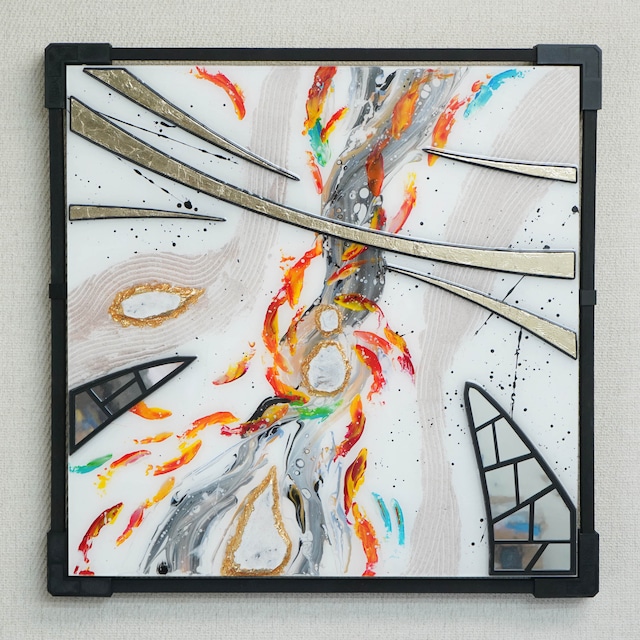
Zen on the wall : bamboo garden Acrylic on panel,metal foil,mirror,Resin resistant to yellowing Width41cm,Height41cm,Depth3cm(W45cm,H45cm with frame) Although we use resin that is resistant to yellowing, its physical properties mean it will gradually yellow over time. The artist has incorporated this yellowing into the concept of the work as part of its aging process, so please keep this in mind when considering a purchase. レジンは難黄変の製品を使用していますが物性上長期的には徐々に黄変します。作者は黄変もエイジングを楽しむものとして作品のコンセプトに織り込んでおりますのでご理解いただいた上で購入を検討して下さい As exemplified by the famous “Bamboo Grove Path” in Arashiyama, Kyoto, bamboo is inextricably linked to Japanese garden culture and is widely used as a decorative element and structural component in features such as bamboo fences, shishi-odoshi (water-spouting stone), kakehi (water channels), and suikinkutsu (water stone chimes). Inspired by the “Bamboo Garden” at Koko-en in Himeji, this work features a stream modeled after a meandering water garden, with a school of koi swimming within it. Mirroring the bamboo shoot—a symbol of growth— we placed mirror objects shaped like bamboo shoots around the installation, embodying our hope that Fukushima will continue to flourish in the future. 京都嵐山の有名な「竹林の小径」に代表されるように、竹は日本の庭園文化と切っても切れない関係で、竹垣やししおどし、筧(かけひ)、水琴窟(すいきんくつ)などの装飾や構成要素として広く用いられます。 本作は姫路 好古園「竹の庭」に着想を得、曲水庭園を模して構成された流れに鯉の群れを配し、成長のシンボルである筍のように福島がこれから伸びていく願いを込めて周囲に筍モチーフのミラーオブジェクトを置きました。

Zen on the wall : Fish live in a water basin
¥110,000
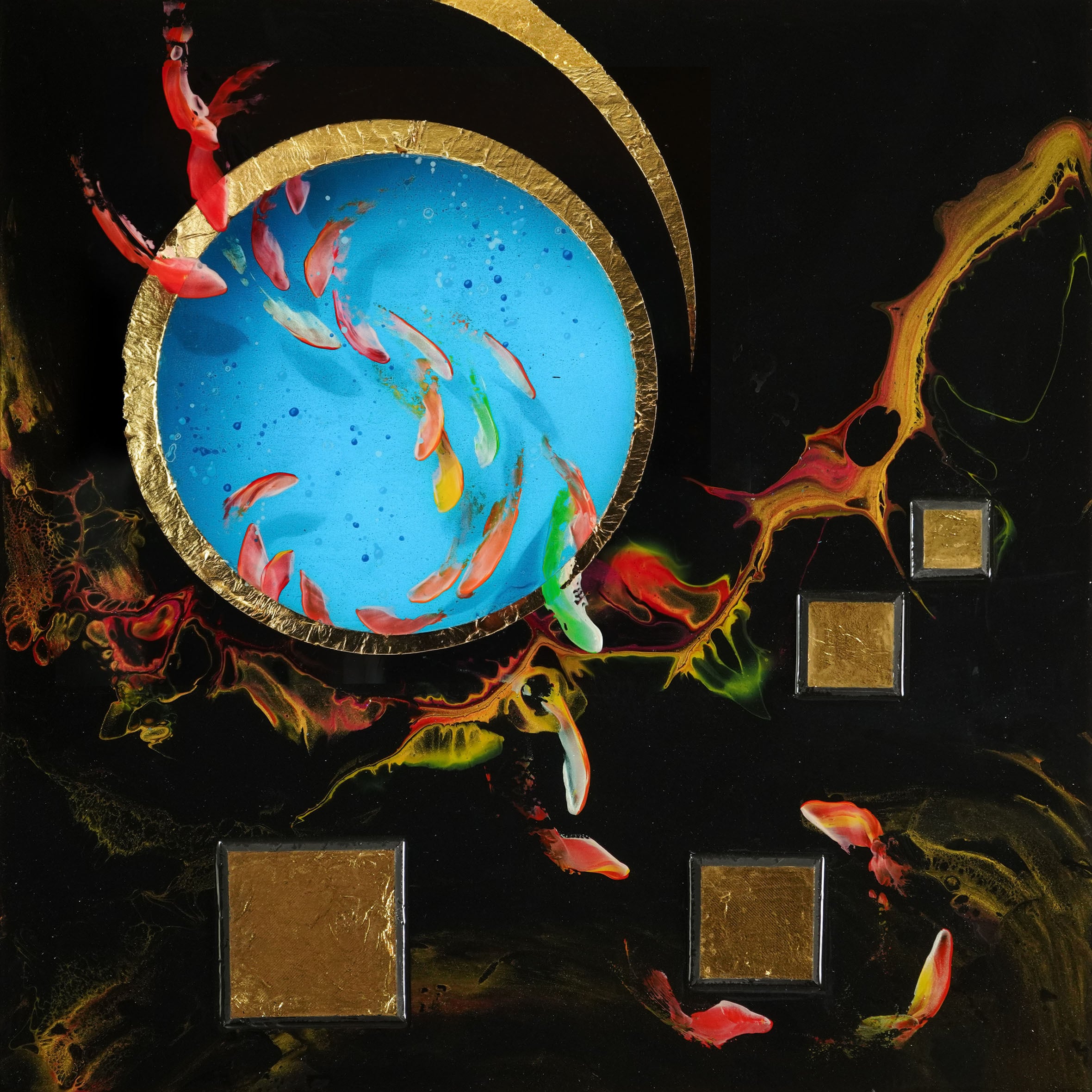
Zen on the wall : Fish live in a water basin Acrylic on panel,metal foil,mirror,Resin resistant to yellowing Width41cm,Height41cm,Depth3cm(W45cm,H45cm with frame) Although we use resin that is resistant to yellowing, its physical properties mean it will gradually yellow over time. The artist has incorporated this yellowing into the concept of the work as part of its aging process, so please keep this in mind when considering a purchase. レジンは難黄変の製品を使用していますが物性上長期的には徐々に黄変します。作者は黄変もエイジングを楽しむものとして作品のコンセプトに織り込んでおりますのでご理解いただいた上で購入を検討して下さい A tsukubai (also known as a tsukubai or tsukubai-gura) is a water basin (chōzubachi) used to purify one’s hands before entering a tea room. Since fewer homes now have tea rooms, they are often placed in gardens as decorative features, and it is common to see goldfish swimming in them. This work features a goldfish swimming quietly in the center of the tsukubai, with the light of the winter full moon glistening on the water’s surface abstracted and reconstructed. If you stand quietly before this work and listen closely, you will likely hear the sound of water flowing from the kakei (water channel) into the tsukubai. 蹲(つくばい 蹲踞とも)とは茶室に入る前に手を清めるために水をためてある手水鉢(ちょうずばち)のことです。現在では茶室を持つ家が少なくなったため庭園の装飾として置かれる事が多く、その中で金魚が泳いでいる風景もよくみられます。 本作は蹲の中で静かに泳ぐ金魚を中央に配し、水面に煌めく冬の満月の光を抽象化して再構成しました。 この作品の前で静かに耳を澄ましていただければ、筧から蹲に水が流れる音がきこえてくることと思います。

Zen on the wall : Fish into stream
¥220,000
Zen on the wall : Fish into stream [2025] Width100cm / Height65cm / Depth2cm (no frame) Acrylic on canvas,metal foil // notice // This artwork cannot be shipped outside of Japan. ------ Zen on the wall : 川瀬遊魚 [2025] 渓流のようなせせらぎを表現した背景を涼やかに泳ぐ魚たちの抽象的な構成。動くせせらぎの反射を金属箔で表現。2025年の個展でメイン作品として展示し、今でもわたしの代表作となっています。 キャンバスの上に浮かんでいるように見えますが半立体などではなく浮いているように描いてあります。 額装はありません。お客様のほうで額装されるか購入前に額装をお問い合わせください。額装イメージと価格をご提案させていただきます(おおむね2~3万円でご提案いたします)

Zen on the wall : The Garden with the Crane
¥110,000
Zen on the wall : The Garden with the Crane [2025] Width41cm / Height41cm / Depth3cm (W45 H45 with frame) Acrylic on panel,metal foil,Resin resistant to yellowing Although we use resin that is resistant to yellowing, its physical properties mean it will gradually yellow over time. The artist has incorporated this yellowing into the concept of the work as part of its aging process, so please keep this in mind when considering a purchase. レジンは難黄変の製品を使用していますが物性上長期的には徐々に黄変します。作者は黄変もエイジングを楽しむものとして作品のコンセプトに織り込んでおりますのでご理解いただいた上で購入を検討して下さい Japanese gardens possess a unique design aesthetic found nowhere else in the world. This is primarily understood overseas through the concept of “wabi-sabi.” Among these, the most distinctive is the “karesansui” dry landscape garden, which expresses water features using stones and sand. The process of raking the laid-out sand to create patterns that represent flowing water is unparalleled anywhere in the world. The Zen on the Wall series offers a unique interpretation of this distinct worldview and beauty, reconstructing it on canvas. The mirrors used in these works specifically express the element of “borrowed scenery” from Japanese gardens. Borrowed scenery refers to the concept of incorporating the landscape outside the garden as an element within the garden itself. The mirrors change infinitely depending on where the painting is displayed, never representing a fixed element. This signifies the work's “eternal change.” Furthermore, by reflecting the landscape, the mirror fluidly blurs the viewer's perception of “outside” and “inside,” reminding us that this world is perpetually in motion. 日本の庭園は世界のどの国にもない独自のデザイン性を持っている。それは主に「侘び寂び」という言葉で海外に理解されている。 中でももっともユニークなのは水景を石と砂で表現する「枯山水」だ。敷き詰めた砂をレーキで整え、模様を描くことで水の流れを表現するというプロセスは世界のどこにも類を見ない Zen on the wallシリーズはこの独自の世界観と美を独自に解釈し、カンバスに再構築したものだ。特に作品で使用されているミラーは日本庭園の「借景」という要素を表現している。借景とは庭園の外の風景を庭園の要素として取り入れる概念を指す。ミラーはこの絵を飾る場所によって無限に変化し、固定された要素を表現しない。それは作品の"永遠の変化"を意味している。 またミラーが風景を写し取ることにより、作品の世界は鑑賞者にとっての「外」と「内」を流動的にしてしまい、この世界がつねに動き続けていることを再認識させてくれるだろう

Zen on the wall : Fish around Stone
¥110,000
Zen on the wall : Fish around Stone (2025) Width41cm / Height41cm / Depth3cm (W45 H45 with frame) Acrylic on panel,metal foil,Resin resistant to yellowing Although we use resin that is resistant to yellowing, its physical properties mean it will gradually yellow over time. The artist has incorporated this yellowing into the concept of the work as part of its aging process, so please keep this in mind when considering a purchase. レジンは難黄変の製品を使用していますが物性上長期的には徐々に黄変します。作者は黄変もエイジングを楽しむものとして作品のコンセプトに織り込んでおりますのでご理解いただいた上で購入を検討して下さい Acrylic, modeling paste, gold leaf, and resin on veneer panel The rectangle of gold leaf is a symbol of mossy rocks and three goldfish migrate around it. The gold pattern in the background is an image of flowing water, but there is also a faint shimmering pattern on the surface layer of the water. 金箔の矩形は苔むす岩のシンボルであり、その周りを周遊する3匹の金魚。背景の金色の模様は水の流れをイメージしているが、それのみならず表層にもかすかな水面のゆらぎ模様をいれてある

Zen on the wall : Moonlight and fish
¥110,000
Zen on the wall : Moonlight and fish (金鱗水月/Kinrin suigetsu) Width41cm / Height41cm / Depth3cm (W45 H45 with frame) Acrylic on panel,metal foil,Resin resistant to yellowing Although we use resin that is resistant to yellowing, its physical properties mean it will gradually yellow over time. The artist has incorporated this yellowing into the concept of the work as part of its aging process, so please keep this in mind when considering a purchase. レジンは難黄変の製品を使用していますが物性上長期的には徐々に黄変します。作者は黄変もエイジングを楽しむものとして作品のコンセプトに織り込んでおりますのでご理解いただいた上で購入を検討して下さい Kirin suigetu is a coined term denoting both the moonlight reflected upon the water's surface and the fish that shimmer and sparkle in that same moonlight. Japanese domestic gardens often feature a “water lily pot” – a round ceramic basin, typically around 50 centimetres in diameter. Water is collected within it to create a small biotope. On clear nights, the moon reflects upon it, creating a space of profound wabi-sabi charm. When fish strike the surface from below, the moonlight ripples, and the fish scales themselves shimmer faintly. This beautiful world requires almost no maintenance to sustain itself; the ecosystem cycles through the interplay of light, plants, and living creatures. To digress slightly, Japan's Edo period practised sakoku, a policy of isolation, yet despite having no external exchanges whatsoever, the cycle of daily life remained self-contained and cyclical within that closed system. The Japanese understood and practised the concept of “knowing when enough is enough” over 300 years ago. This stands as an antithesis to modern society, which mindlessly produces, consumes, and discards goods driven solely by desire. 金鱗水月(Kirin suigetu)とは水面に反射して映り込んだ月光と、同じく月光でキラキラと輝く魚を表す造語である。 日本の家庭庭園にはよく「睡蓮鉢」という直径50センチほどの陶器で出来た丸い鉢が置かれる。そこに水を貯めて小さなビオトープを作るのだ。晴れた日の夜にはそこに月が映り込み、とても趣のある侘び寂びの空間を作り出す。魚が水中から水面を叩くと月はゆらめき、魚の鱗もまたかすかに煌めく。 この美しい世界は維持するために手入れをする必要がほとんどなく、光と植物と生物との相互関係で生態系が循環する。少し話が逸れるが日本の江戸時代は鎖国しており、外部との一切のやりとりがなかったにも関わらず生活のサイクルがその中で完結し循環していた。日本人は300年以上も前から「足るを知る」ということを知り実践してきたのだ。これは欲望のままに無闇にモノを生産、消費、廃棄する現代社会へのアンチテーゼである。

Zen on the wall : Dry stream and fish
¥110,000
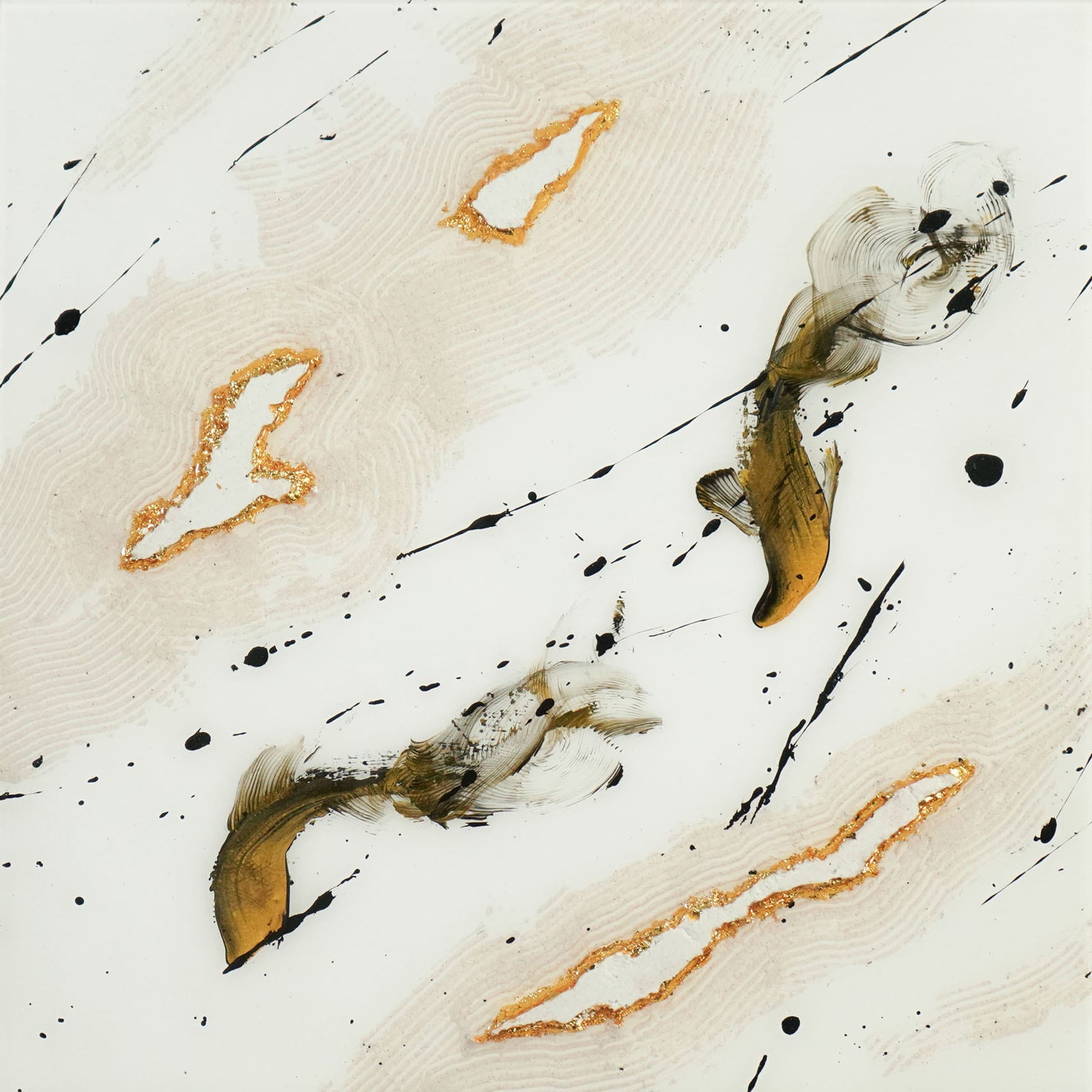
Title : Zen on the wall - Dry stream and fish (枯山水渓流) Production Year :2025 size : Width 41cm / Height41cm / Depth 3cm(W45*H45cm with frame) media : mixed media(Acrylic,modeling past,metal foil on wood panel,Resin resistant to yellowing) Although we use resin that is resistant to yellowing, its physical properties mean it will gradually yellow over time. The artist has incorporated this yellowing into the concept of the work as part of its aging process, so please keep this in mind when considering a purchase. レジンは難黄変の製品を使用していますが物性上長期的には徐々に黄変します。作者は黄変もエイジングを楽しむものとして作品のコンセプトに織り込んでおりますのでご理解いただいた上で購入を検討して下さい Karesansui is a form of Japanese garden that depicts the flow of a river using only stones and sand, without water. Japanese gardens possess a uniqueness not found in gardens of other countries, and among them, karesansui is a particularly distinctive form. This work reconstructs karesansui and the pair of river fish that might inhabit it in a pictorial format. 「枯山水」は川の流れを水を使わず石や砂だけで表現した日本庭園の形式の一つです。日本庭園は他の国の庭園にはない独自性を盛っていますが、その中でも枯山水は特に個性的な形式といえます。 本作では枯山水とそこに棲んでいるであろうつがいの川魚を絵画形式で再構築しました。