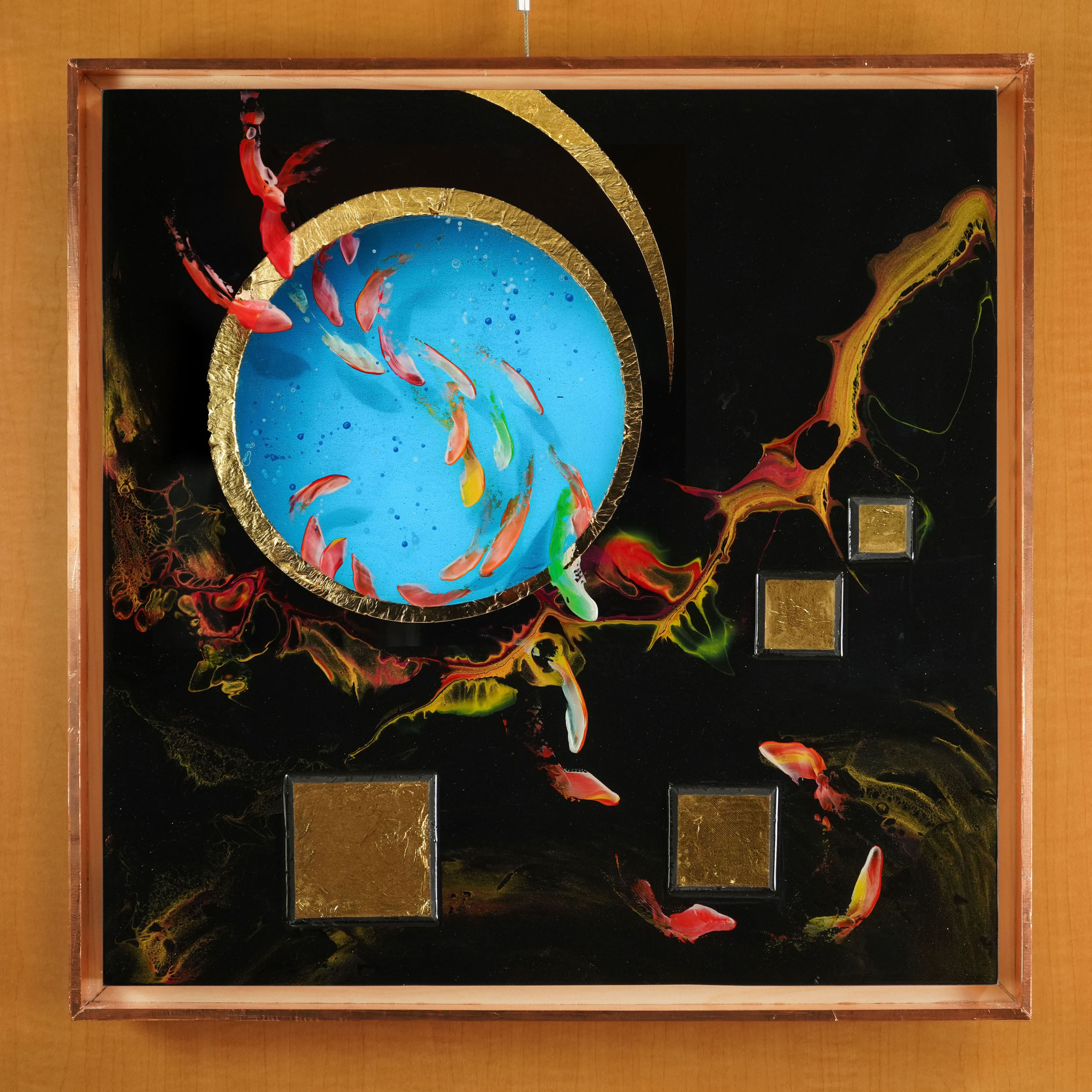



Zen on the wall : Moonlight and fish
¥110,000
残り1点
International shipping available
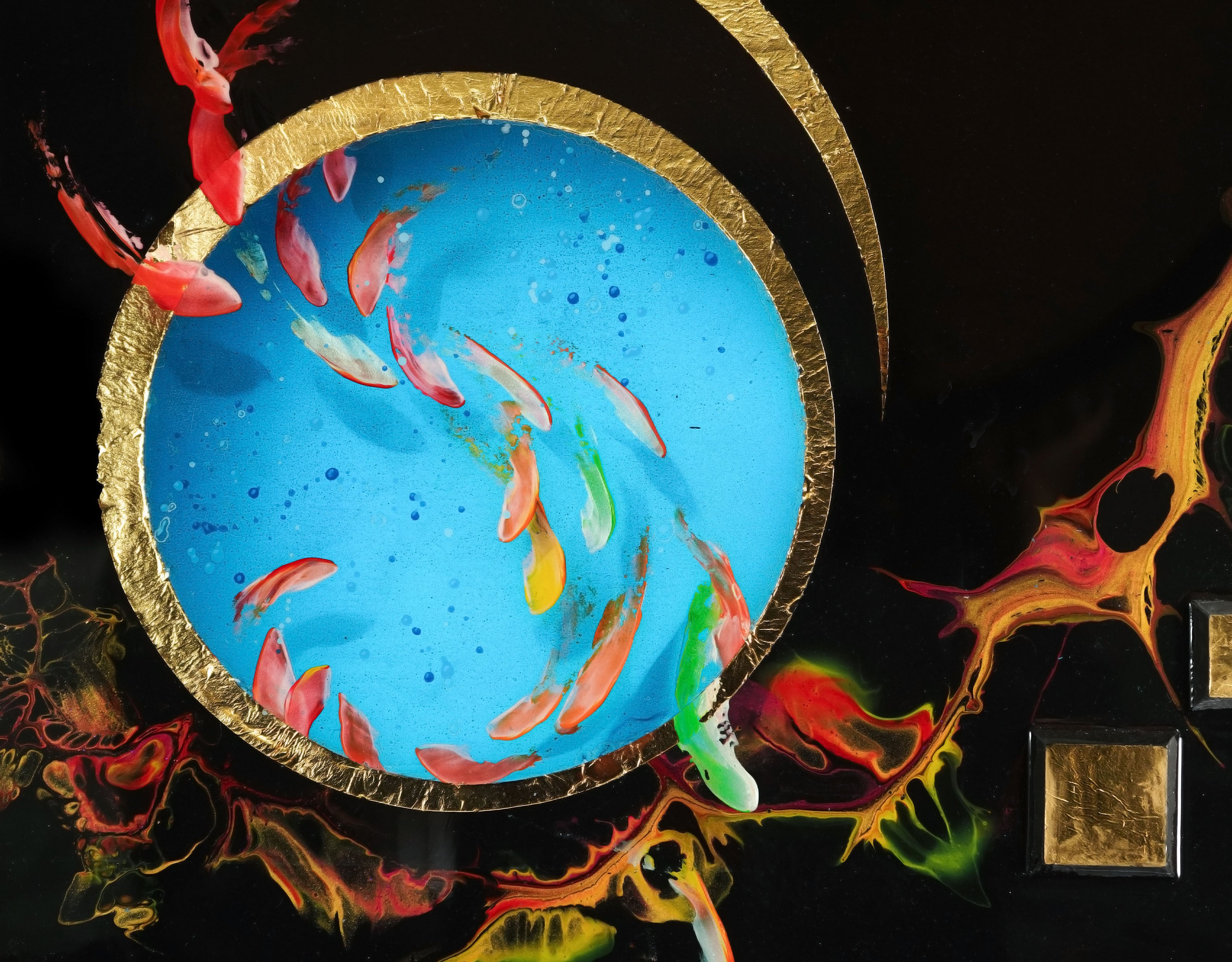
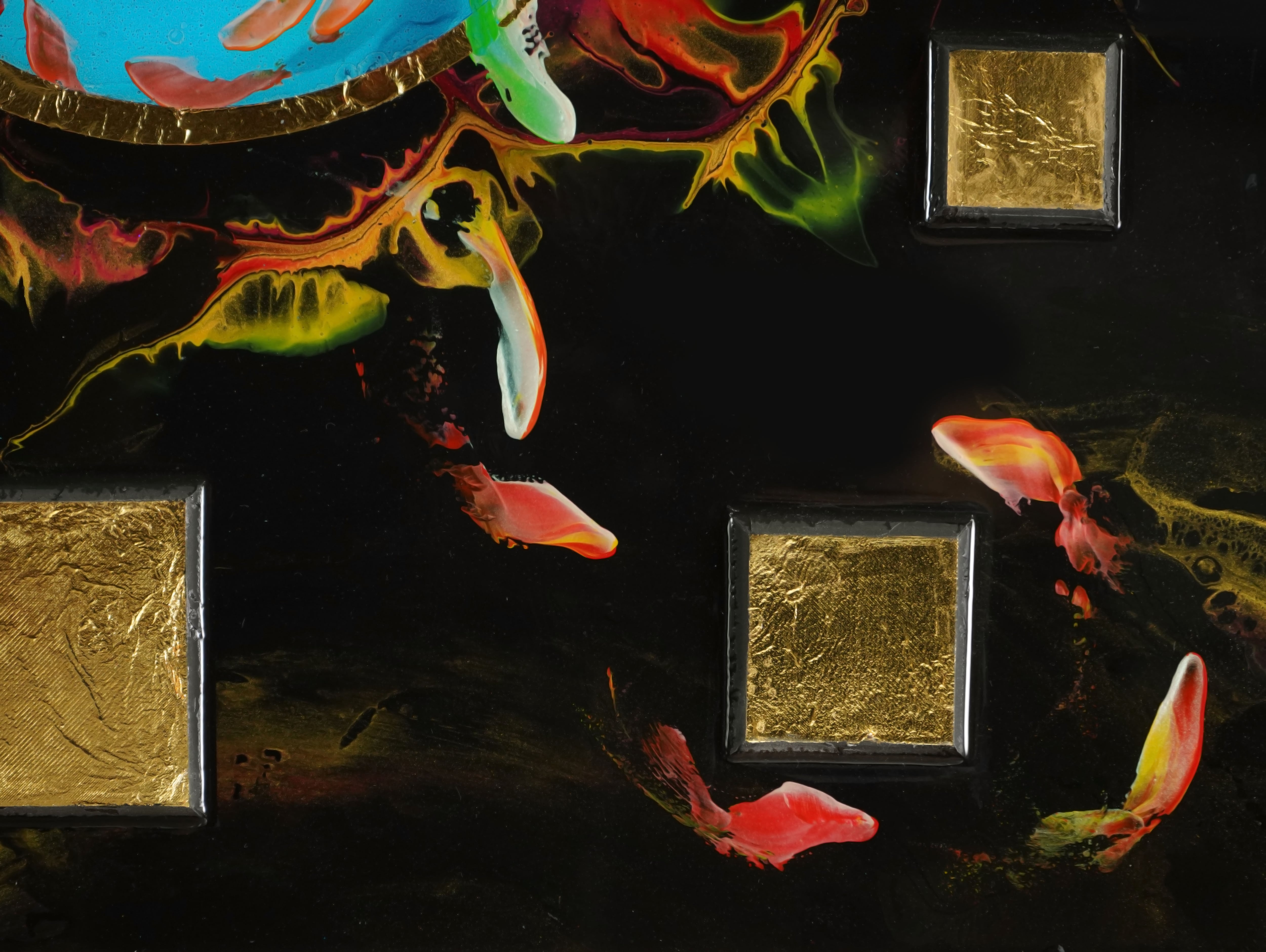
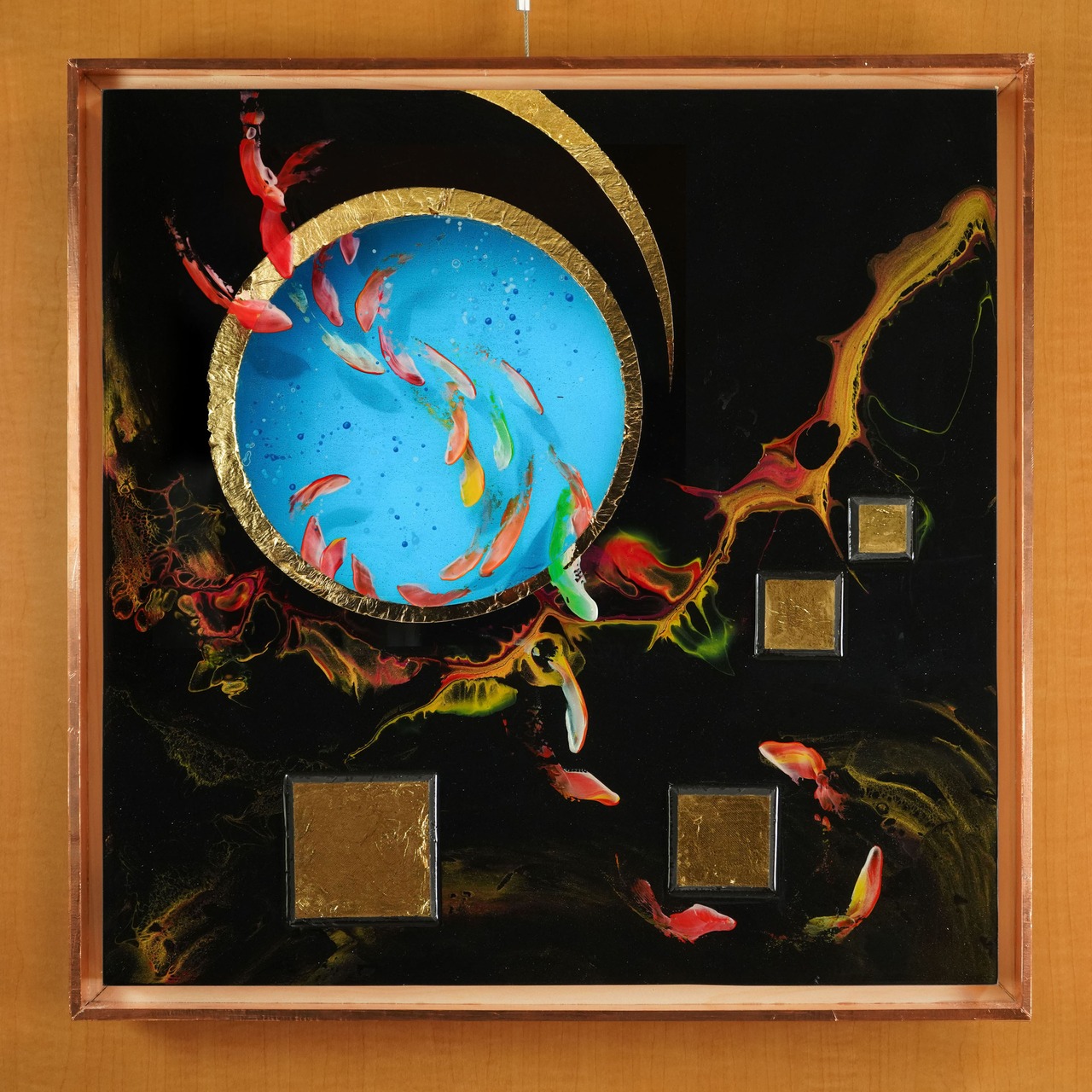
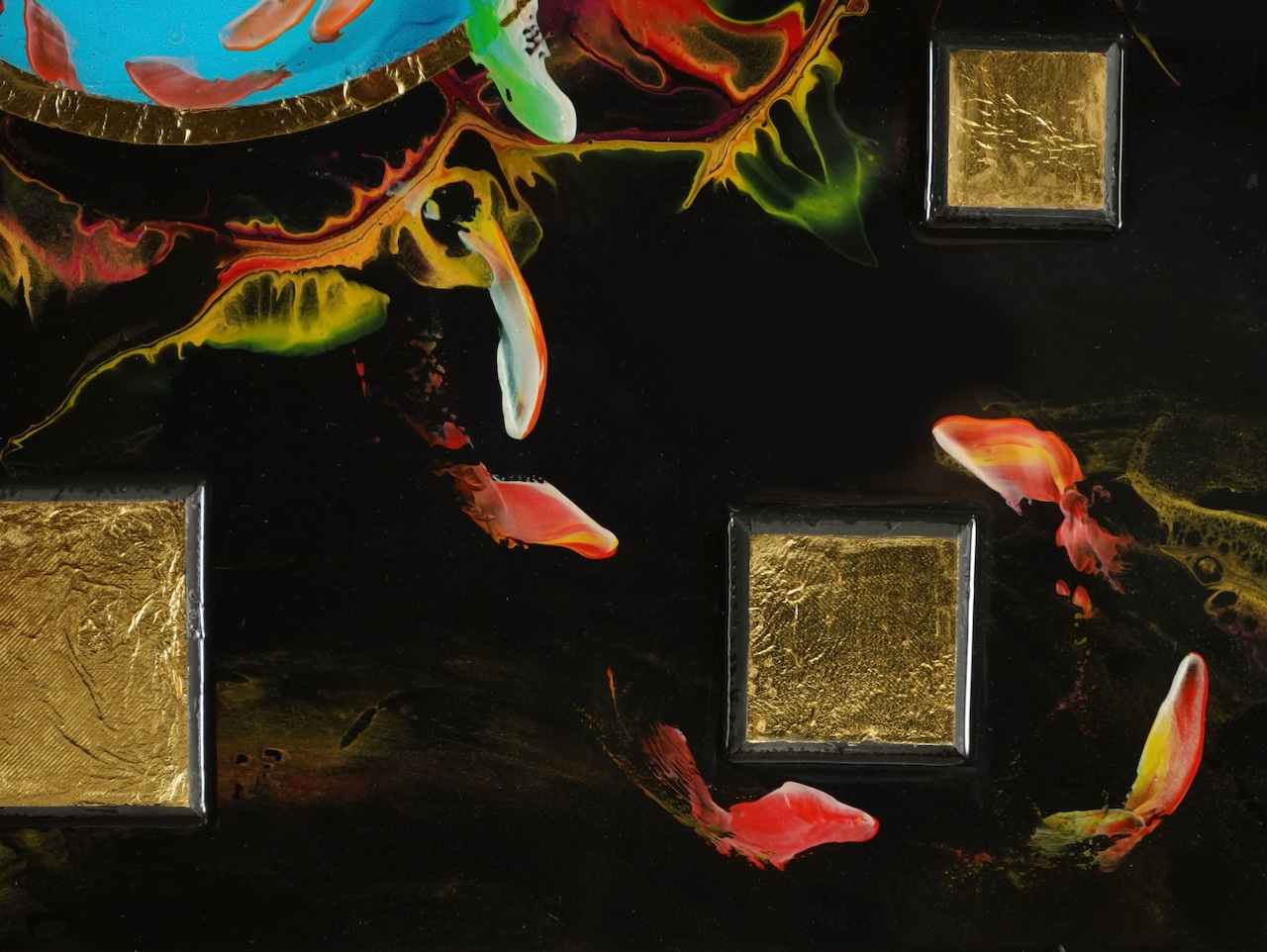
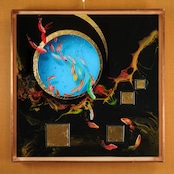
Zen on the wall : Moonlight and fish (金鱗水月/Kinrin suigetsu)
Width41cm / Height41cm / Depth3cm (W45 H45 with frame)
Acrylic on panel,metal foil,Resin resistant to yellowing
Although we use resin that is resistant to yellowing, its physical properties mean it will gradually yellow over time. The artist has incorporated this yellowing into the concept of the work as part of its aging process, so please keep this in mind when considering a purchase.
レジンは難黄変の製品を使用していますが物性上長期的には徐々に黄変します。作者は黄変もエイジングを楽しむものとして作品のコンセプトに織り込んでおりますのでご理解いただいた上で購入を検討して下さい
Kirin suigetu is a coined term denoting both the moonlight reflected upon the water's surface and the fish that shimmer and sparkle in that same moonlight.
Japanese domestic gardens often feature a “water lily pot” – a round ceramic basin, typically around 50 centimetres in diameter. Water is collected within it to create a small biotope. On clear nights, the moon reflects upon it, creating a space of profound wabi-sabi charm. When fish strike the surface from below, the moonlight ripples, and the fish scales themselves shimmer faintly.
This beautiful world requires almost no maintenance to sustain itself; the ecosystem cycles through the interplay of light, plants, and living creatures. To digress slightly, Japan's Edo period practised sakoku, a policy of isolation, yet despite having no external exchanges whatsoever, the cycle of daily life remained self-contained and cyclical within that closed system. The Japanese understood and practised the concept of “knowing when enough is enough” over 300 years ago. This stands as an antithesis to modern society, which mindlessly produces, consumes, and discards goods driven solely by desire.
金鱗水月(Kirin suigetu)とは水面に反射して映り込んだ月光と、同じく月光でキラキラと輝く魚を表す造語である。
日本の家庭庭園にはよく「睡蓮鉢」という直径50センチほどの陶器で出来た丸い鉢が置かれる。そこに水を貯めて小さなビオトープを作るのだ。晴れた日の夜にはそこに月が映り込み、とても趣のある侘び寂びの空間を作り出す。魚が水中から水面を叩くと月はゆらめき、魚の鱗もまたかすかに煌めく。
この美しい世界は維持するために手入れをする必要がほとんどなく、光と植物と生物との相互関係で生態系が循環する。少し話が逸れるが日本の江戸時代は鎖国しており、外部との一切のやりとりがなかったにも関わらず生活のサイクルがその中で完結し循環していた。日本人は300年以上も前から「足るを知る」ということを知り実践してきたのだ。これは欲望のままに無闇にモノを生産、消費、廃棄する現代社会へのアンチテーゼである。